Wednesday, February 16, 2011

Chirp, Chirp?

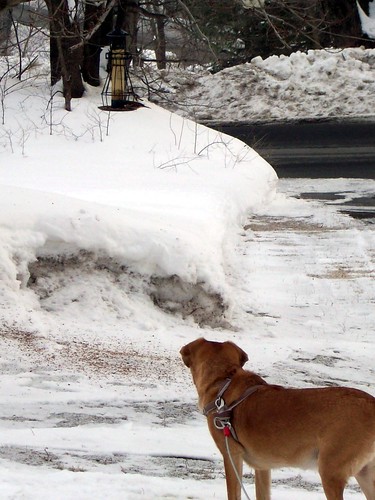
Happy Wordless Wednesday... winter is for the birds, I tell ya!

BirdFeeders_13011c

BirdFeeders_13011d BirdFeeders_13011g

BirdFeeders_13011h

BirdFeeders_Sophie_13011

GIVEAWAY WINNER! Live More,Want Less

Thank you to everyone who entered to win a copy of Live More,Want Less: 52 Ways to Find Order in Your Life

The winner has been selected by random number generator...
Here are your random integers: 4
Timestamp: 2011-2-16

Congratulations to Kim (aka Team Beaglebratz Mom) - here's to working on procrastination together in 2011!  I'll be sending this "wonder book" off to you as soon as I get your snail mail address!

For those of you who didn't win this time, please don't miss my Tiger World Fundraiser Contest - there are several amazing prizes up for grabs!!!

Tuesday, February 15, 2011

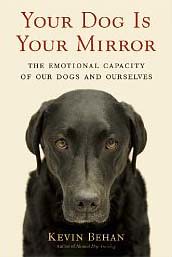
REVIEW: Your Dog is Your Mirror

Your Dog is Your Mirror
The Emotional Capacity of Our Dogs and Ourselves
by Kevin Behan
Hardcover: 344 pages
Publisher: New World Library (February 15, 2011)

41bFPecsKjL__BO2,204,203,200_PIsitb-sticker-arrow-click,TopRight,35,-76_AA300_SH20_OU01_

Kevin Behan, author of Natural Dog Training and one the the nation's foremost leaders in dog rehabilitation, presents a revolutionary new model for understanding canine behavior, built around the framework of emotion, in his new book Your Dog is Your Mirror.  In his book, Behan demonstrates that dogs and man are connected more profoundly than has ever been imagined - by heart - and that as things now stand in the conventional wisdom and scientific study on dogs, we are completely missing the connection a dog makes possible, not only with nature, but most important, with our own human nature.

The following excerpt is the Introduction from Your Dog is Your Mirror...

In The Botany of Desire, author Michael Pollan observes that there are tens of millions of dogs in North America and only ten thousand wolves. He asks, “So what does the dog know about getting along in this world that its wild ancestor doesn’t?” (And I would add, every other animal as well.) Since I’m proposing nothing short of a new paradigm in addressing how dog and human, and especially a dog and its owner, connect, I will sum up my premise right at the outset:

Dog and owner form a group mind.

The best explanation for everything canine, from the evolution of the wolf to the domestication of the dog — to the incredible emotional relationship that has emerged between the modern pet and its owner — is that dogs feel what we feel. This is how a dog “knows” its place and what it must do to get along, a process that has been crudely approximated (and grossly misinterpreted) as a dominance hierarchy and a learning-by-reinforcement theory.

Why isn’t something so fundamental self-evident? Because the human intellect is a relativity machine. It compares one thing relative to another thing, one moment relative to another moment. We end up fixating on the forms of things and situations and see them as connected in a linear, rational sense. This isn’t necessarily incorrect. As Carl Jung put it: “Form gives energy its quality.” However, Carl Jung, on a visit to the American Southwest in the fifties, had a transformative conversation with a Hopi native. The elder told him the white man was restless and “mad” because white people think with their heads, whereas the Hopi think with their hearts. This conversation profoundly influenced Jung’s philosophy of life. It helps us see that there can be a form of intelligence that has nothing to do with thinking, and this is being expressed by the intelligent ways that dogs adapt to human civilization.

If we don’t apprehend the energetic essence that all things have in common, our mind will perceive the inside as being distinct from the outside, the mind separate from the body; time segmented into a past, present, and future; nature disconnected from humans; and our dog as a separate conscious being apart from ourselves. We will not see that dog and owner are connected by emotion and going by feel.

Dogs, on the other hand, don’t see the world in terms of one thing or one moment relative to another. A dog’s mind is an energy circuit. What it feels is indistinguishable from where it is, its consciousness a function of its surroundings, whoever or whatever it finds therein and whether or not it feels connected to all of this. This is why dogs are compelled to smell; they’re importing the essences of things, the energy within the form, directly into their gut so it can be digested. Sensory inputs become integrated with viscera so that a dog becomes physically rather than mentally connected to its world. A dog doesn’t apprehend its “self” as separate or distinct from whatever or whomever it is attracted to.

Our current scientific models intellectualize nature and personify dogs in ways that prevent an owner from being able to see the dog’s true nature. Everything a dog does and even its personality is a one-to-one translation of what its owner is feeling. A dog and owner evolve to form one “group mind,” each the emotional counterbalance to the other and yet both aligned around a common want, the pursuit and resolution of which is the main subject of this book.

Haven’t you ever seen a dog do something that was so bizarre and out of character you didn’t know what to make of it? Maybe the dog was unexpectedly aggressive, or acted strangely only when one particular relative visited. Does your dog do something that seems calculated to drive you nuts? Did your dog develop bad habits no training regime can make it give up? The reason may surprise you, and the way to fix these “problems” will be more surprising still. Having grown up the son of a famous trainer, and now a trainer myself, I will share my story, and my theory, and show you how to understand your dog in a new way.

As an illustration, here is an exchange I had with Sandy, who owns a German shepherd dog named Rufus. Sandy contacted me through her dog’s breeder, Ellen. She wanted to know what I made of Rufus’s reaction to her Christmas tree ornaments. Here is what Sandy initially wrote to Ellen:

We put up a ten-foot Christmas tree in the living room. It’s all decorated — but obviously Rufus isn’t too crazy about where I put the ornaments. He very, very carefully takes each one off and carries it over to a pile (he can reach up about three and a half feet without stretching too much). He doesn’t sneak around — he does it right in front of us! Madeline looks at him like “Boy, are you going to get it!” All we can do is laugh, and put them back on the tree. It’s now a game.

Here is the reply I sent to Ellen:

Apparently when Sandy was putting up the ornaments she was experiencing deep feelings relative to Christmas, such as poignant reminiscing, memories of joy or sadness, probably of a time when she was young or when her kids were young, something to that effect. Rufus picked up on those feelings and is treating the ornaments in terms of that specific emotional “charge.” He’s putting the ornaments back into the group’s center, in other words, the nest. The ornaments are to Rufus a projection of Sandy’s tender feelings, which energetically in terms of emotion make them for Rufus tantamount to young, infant pups, and so he carries them back to their nest.

Sandy replied to Ellen as follows:

Your friend Kevin might have something! How very interesting! I have not spent Christmas with my family since I moved to the East Coast thirteen years ago. I’ve always been working and have not been able to make it home. Christmastime was always very special, and I tried to make it that way for my two daughters as well. I have not decorated a tree without having an ache in my heart. Many of the ornaments were made by my kids or given to me as gifts....Do you think Rufus could actually pick up on that? He is very sensitive.

Rufus is very sensitive indeed. Rufus knows Sandy “by heart.”

This book is different from other examinations of the canine/human connection because it concentrates on what dog and human share in common rather than what makes us different. We’re not going to consider how the canine sense of smell is far more powerful than ours, what frequency of the electromagnetic spectrum they can see that we cannot, what range of sounds reaches their ear and not ours — as interesting and valuable as such discussions may be. Instead, we will examine the idea that emotion is energy, that it is how consciousness makes contact with nature. Feelings are universal to all sentient beings in nature, whereas thoughts, instincts, and genes, and all the specific adaptations that arise from these, are what differentiate our two species and in the final analysis keep us separate. Therefore, to truly know a dog, especially our own dog, requires reconnecting with our own emotional nature so that we learn more about the nature of what we’re feeling because this is precisely how our dog’s mind works. The energetic principles of emotion are the operating system of a networked intelligence. Perhaps the most amazing thing I’ve learned from dogs is that the heart, the organ in our chest that pumps our blood, is this network’s brain.

I will examine these ideas through three themes: 1) We don’t know what we’re feeling. 2) The behavior of dogs can teach us about emotion and feelings. And 3) the real reason for the dog in our life is emotional. We carry around in our body/mind the physical memory of every emotional experience we’ve ever had; I call this physical memory our “emotional battery.” This is what our dog tunes into and responds to accordingly. When we understand that dogs are emotional beings, that emotion is a force of nature as real as gravity, and that our dog’s emotions are a source of information for us that is often obscured from our eyes by human reason, then we will see our dog not as a being apart from us but instead as being a part of us.

The first theme is essentially that our dog feels what we feel even when we can’t. The human intellect is so powerful that our thoughts run simultaneously with our feelings; they can overwhelm what we feel and lead us to confuse what we feel with what we think. Our prodigious brainpower can even deny the underlying emotion within a feeling altogether. Thus emotion is always confused with instinct (as when we consider fear a basic emotion) and thoughts are always linked with feeling (as when we say things like, “I feel threatened”). This keeps us in the dark about how emotion works. For example, as pure energy, emotions are always a positive force of attraction. Moreover, true feelings are always an emotional counterbalance to what one is attracted to, and they always feel good. There’s no such thing as a “bad” feeling; what we consider a “bad” feeling is actually the collapse of a good one.

Meanwhile, because dogs don’t and can’t think, they do not respond to what their owner thinks, says, or even does; rather, dogs react according to their owner’s emotion as a force of attraction. (For example, we might think we’re mad at someone, whereas our dog will feel that we are intensely attracted to that person. And our dog is right.) Dogs don’t project thoughts onto their owners, they project a feeling. Emotions are a universal code among all animals, from mouse to moose to human, and what dogs feel and then do represents a decoding of an owner’s thoughts, actions, feelings, memories, and instincts back into the primal emotional logic that best expresses the owner’s emotional, or animal, mind.

The second theme looks at what the behavior of dogs reveals to us about emotion, which is, in short, that emotion is the basis of the animal mind and forms an interwoven consciousness, or networked intelligence. Emotion is energy, and energy can move freely between the forms of things; it is not constrained or self-contained within a particular being. This is why emotion is infectious. However, emotion doesn’t move at random (and certainly not by reason) but rather by its own inherent properties and principles of movement. This is why there is a distinct thermodynamics and physical consequence to emotional affects within the body. All animals feel energy the same way, and so emotion as energy is also a synchronizing medium, a platform on which individuals self-organize into social structures and cooperative relationships. Leaders do not organize the group; there is no evidence in nature or in the domesticated dog that supports such a notion. Instead, one shared emotional mind weaves the many into one. This group mind is composed by the principles by which emotion as energy moves. The group mind does not “learn” — as in, “If A causes B, then therefore C follows” — rather, it evolves according to principles of energy, and this distinction explains many idiosyncrasies of animal learning that are confusing when seen in the traditional way (which assumes animals learn by the same mental dynamic humans learn by).

Finally, the third theme proposes that the real reason for the dog in our life is not for companionship, for service, or to save a forlorn canine waif from a life of unfortunate circumstances, as worthwhile and benevolent as all these reasons are. The real reason for the dog in our life is to reveal what instincts, thoughts, and judgments prevent us from feeling what is at the very bottom of our heart. These instincts, thoughts, and judgments are the cause of the unresolved emotion we carry, and unresolved emotion is what truly drives us. Unresolved emotion is the physical memory, carried in the body, of every emotional experience that has been lived. Resolving unresolved emotion is the fundamental common denominator to everything an animal, especially a social animal, does. How individuals respond to the way unresolved emotion makes them feel determines how they create their “network.” Our dog’s behavior and personality are not a function of its own self-contained agency of mind; in reality, our dog is acting out, in its own way, the unresolved emotion that disturbs us, as its owner. Dogs evolved to resolve unresolved emotion because resolving unresolved emotion is how nature evolves.

The premise of this book is that your dog is your emotional mirror: this means that the dog can read what’s going on inside its owner, and it is possible for the owner to know what’s going on inside their dog. I admit that it would be a lot easier to simply say a dog “thinks” or it “knows” this or that, but this does not reflect the actual physical laws at work. At a recent seminar, to help participants feel exactly how a dog feels and how it knows how to synchronize with others, I decided to equip them with powerful shop magnets and ask them to walk toward each other, leading with the magnet in their hand. They couldn’t address or touch their fellow participants until their magnets paved the way. As they neared each other, depending on how they were holding the unmarked magnet, they felt either a powerful surge to connect with their fellow participant or an equally powerful force of repulsion. Some people instantly connected with the person they pressed into, others felt pushed away. This is what dogs feel when they smell something. (Of course, this is an oversimplification of the process, which is electrical and not purely magnetic, but we will consider this in more depth as we go on.)

I then asked the participants to hold the same poles of two magnets together and feel that force of repulsion between their fingers, as they tried to force the magnets together against their “will.” This is what dogs feel when they go into what’s called “avoidance behavior,” as for example when we hug a dog and he tries to look away and arches his neck to put some distance between his head and the person’s head who’s forcing the cuddling. Many dogs will wriggle free and then immediately flip their body around and present their rump for a tail scratching; they’re positioning the south pole of their body/mind as a magnet to their owner’s north. We might think the dog wants its tail scratched, but it’s really “flipping polarity” in accord with its inner magnet. We can also see this magnetic force of deflection when a dog approaches another dog’s head and then continues on to smell its genitals, or even flips around to present its own hind end for inspection.

This simple experiment allows us to make an important insight into the mind of the dog. What’s important about a magnetic connection is that if it’s strong enough, the individuals don’t have to maintain an actual physical connection in order for energy to move between them. They can move about freely and still feel connected because an emotional bond, just like a magnetic field, makes one feel as if they are receiving energy over a distance without wires. These are quite literally what we intuitively call “heartstrings.”

When you love someone, then everything in your life suddenly feels energizing: colors are brighter, burdens not so great; you might even find yourself singing in the rain. This is not just the stuff of romance; it’s the joie de vivre all animals experience when they feel connected to others.

Finally, even though my participants only hold a simple magnet, it nonetheless is quickly apparent that each person has to become the mirror of another person if they want to connect with that person. The opposite poles must meet. Therefore it is impossible for two beings — even if they have the exact same genes and the exact same personal background — to have the exact same emotional experience of any event. And yet they wouldn’t vary at random. They would respond to significant things in mirror image. Two emotional beings that connect and bond form one heart. And everywhere they go, whether together or separate, they feel a tug on their strings.

From the book Your Dog is Your Mirror. Copyright © 2011 by Kevin Behan. Reprinted with permission of New World Library, Novato, CA.


About the Author: The author of Natural Dog Training, Kevin Behan is a veteran dog trainer and one of the nation’s foremost leaders in dog rehabilitation. Originally trained under the dominance theory by his father, John Behan, who pioneered the use of trained security dogs outside the military and was one of the first in America to make dog training a career, Kevin came to understand that what made the modern dog adaptable and trainable was not the dominance hierarchy as taught to him but the dog’s ability to work as a cooperative group member in the hunt. After training thousands of dogs for both aggression and obedience, as well as bomb-sniffing and other security purposes, he established his own kennel, Canine Arts, and the Natural Dog Training method. Since then, he has continued to transform the way people look at their pets, and has saved hundreds of dogs from being put to sleep. He lives with his family on a sixty-acre farm in southern Vermont. His website is http://www.naturaldogtraining.com/.

Monday, February 14, 2011

Be Ours...

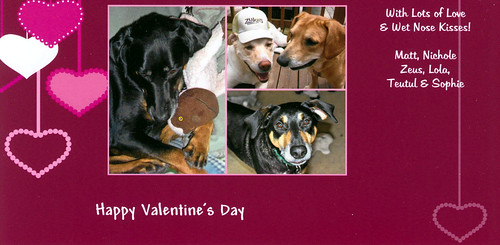
from the Lapdog household to yours... Happy Valentine's Day!!!

Valentine2011

Sunday, February 13, 2011

Help Tiger World and WIN!

Diego
Diego 7/26/10 - 1/16/11
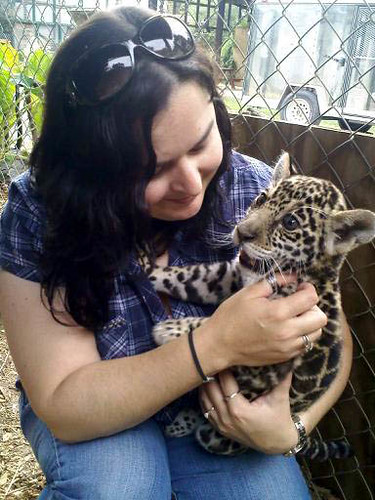
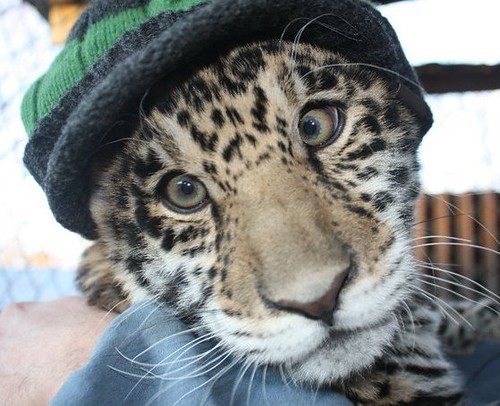
Regular readers know that I am a huge supporter of Tiger World in Rockwell, NC... and you know the story of how some big cats really stole this crazy dog lady's heart - including the jaguar cubs, Dora and Diego.  Sadly, the entire Tiger World family was devastated when they unexpectedly had to say goodbye to these beautiful babies last month.  Two lives were cut far too short due to an infection that their tiny bodies couldn't fight. After testing and research, the infection has been determined to be a hybrid strain of parvo, first contracted by Diego and then unknowingly passed on to Dora.  The strain comes from wildlife (raccoons, foxes, etc) and the vaccinations were just not able to provide coverage against this mutagenic strain.
TW_101410n_malia
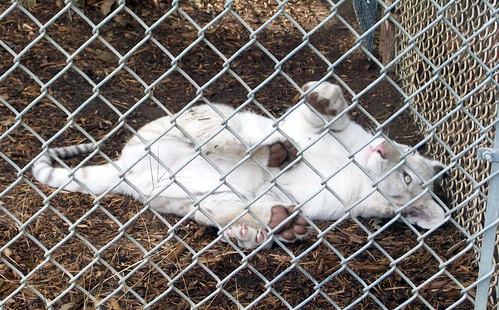
Malia, playing during our visit 10/14/10

Malia, a stunning snow tiger named after the First Daughter, has also contracted the strain of parvo.  However, thanks to an experimental drug made for humans, everyone is happy to report that she is overcoming the infection and doing well!

As you can imagine, Tiger World has accumulated several thousands of dollars in vet bills and could really use our help during this difficult time!  They are a non-profit 501(c)(3) charity and one of only a handful of accredited zoos in the country that operates without tax support.  
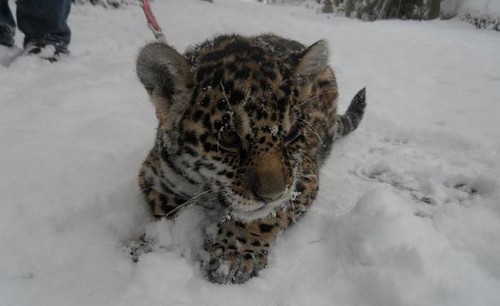
Dora_Jan2011
Dora 7/26/10 ~ 1/22/11
I wanted to come up with a fun way to help Tiger World raise funds, plus spread the word about this wonderful sanctuary/zoo... all while giving you an opportunity to win some fantastic prizes.  After talking to Lea at Tiger World (who so graciously offered up some photo cards, posters and admission tickets for the prize pool), here is what we've come up with....

Tiger World Donation Contest - How to Enter:

1. Make a donation to Tiger World via their website - give whatever you can, whether it be $5, $10, $50... it all adds up.  Your donations will help with the vet bills from the past month, as well as help with Dora & Diego's Memorial

2. Leave a comment here indicating that you have donated to Tiger World

3. Email a copy of your donation confirmation to us (LapdogCreations at AOL dot COM) ** Please feel free to remove any personal information, as well as the actual amount of your donation before forwarding.  If you still have an issue with this step, please email and we'll work to confirm your donation directly with Tiger World. **

That's it - 3 simply steps!  But you must complete all 3 to be entered to winThe deadline is March 6

About the Prizes!  Prizes will be divided up into at least 5 groups, possibly more depending on how many people participate.  Prizes include:
Nic_Diego_cellphonepic
Diego & I, 10/14/10

*If you enter and there are prizes that you absolutely would not want to win, please let us know in your comment (i.e. "not a knitter" or "no dog items").  That way we're not sending off completely useless prizes to you if you win!

Winners will be choosen by random.... names will be written down and placed into a hat to be drawn.  The amount donated will not affect your odds of winning.  Remember, the deadline is March 6.  Winners will be announced within a day or two after the deadline! 

It's a win-win situation for everyone... you can support a wonderful cause thru a tax deductible donation and have a chance to win some fabulous prizes... and the animals at Tiger World thank you for it!




Friday, February 11, 2011

Filling in on Friday

Happy Friday!  Please stay tuned for a special contest post over the weekend.  If you've been reading right along here, you know I hold a special place in my heart for two adorable jaguars, Dora & Diego, who's lives were cut far too short.  I'm putting together a special fundraising post for Tiger World and will tie it into a contest with some great prizes - books, yarn, stitch markers, dog items and more!  I hope that you will all participate in whatever way you can... whether it be donating $5 or just spreading the word.  If you are among my crafty friends who may be interested in donating to the prize pool, please let me know asap (I didn't want to beg too many of you, after all).  The post will go live sometime over the weekend... but in the meantime, it's Friday Fill-Ins...

FFI

1. Family can be a blessing or a curse.

2. Everyone has their ups and downs.

3. Trust should not be taken for granted... once lost, it's difficult to regain.

4. Shake the Magic 8 Ball and wish for the best.

5. Parents are not perfect.

6. You can never take back what was said, even in the heat of the moment.

7. And as for the weekend, tonight I'm looking forward to some new Walterisms, tomorrow my plans include watching the Bud Shootout (let's go racing boys!) and Sunday, I want to get some knitting done!

Thursday, February 10, 2011

REVIEW: Simply Bags - Tote Bags

Simply Bags - Tote Bags
Where to Find: Simply Tote Bags

DogBag

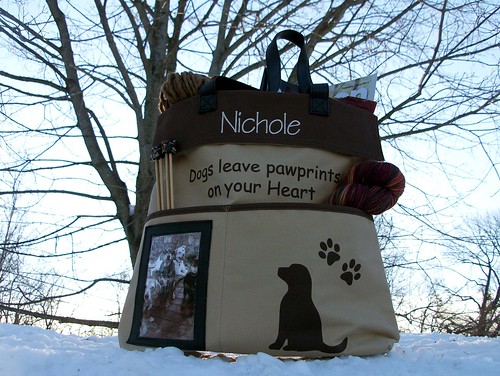
Lapdog Mama's got a brand new bag... and I heart it!  I received the Dog Tote Bag from Simply Bags, makers of embroidered tote bags, for review a couple of weeks ago.  

DogBag_backThe Dog Tote makes a great, well... doggy bag.  Use it to hold all of your pooch's essentials - leash, water bottle, food, favorite toy, treats, etc.  It makes a great day trip bag whether you're headed off for a fun afternoon at the dog park or for an overnight stay at Grandma's house.  Of course, the Dog Tote also makes a great everyday bag for doggy Mamas!  It's great for toting around craft, school or work items (yes, it will hold file folders with ease).  Mine will pull double duty, but more than likely be used more for toting human items.  It's the perfect size for an adventure that must include knitting, a magazine and my nook, plus it can still fit water, toys and some treats (for both human and K9). 
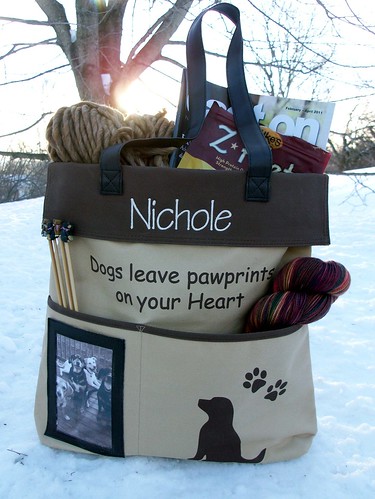
DogBagBThe Dog Tote is one of those perfect sized bags - not too big, not too small - and it hangs nicely over your shoulder, or you can carry it by the handles. Made of lightweight water repllent fabric, the tote measures 14" wide x 14" tall x 3" deep. Besides the roomy main compartment, there are two outside pockets on the front and one zippered pocket on the back. A clear slot on the bottom left-hand corner holds a 3.5" x 5" photo of your furry friend.  One of my favorite sayings, "Dogs leave pawprints on your Heart," is embroidered on the front, plus you get your pooch's name across the top at no extra charge.  Since there's no way Mama could pick just one Lapdog, I opted to go the human name route.

I love everything about this bag - the neutral colors, the saying, the photo slot, the cute puppy silhouette.... and especially the seemingly easy to care for material.  It has already been slobbered on by at least two Lapdogs (Lola, the queen licker, must taste everything) and it wiped clean with a damp towel in seconds. If you're in the market for a new bag or need a solution for organizing you dog's items, check out the Dog Tote!
Related Posts Plugin for WordPress, Blogger...